
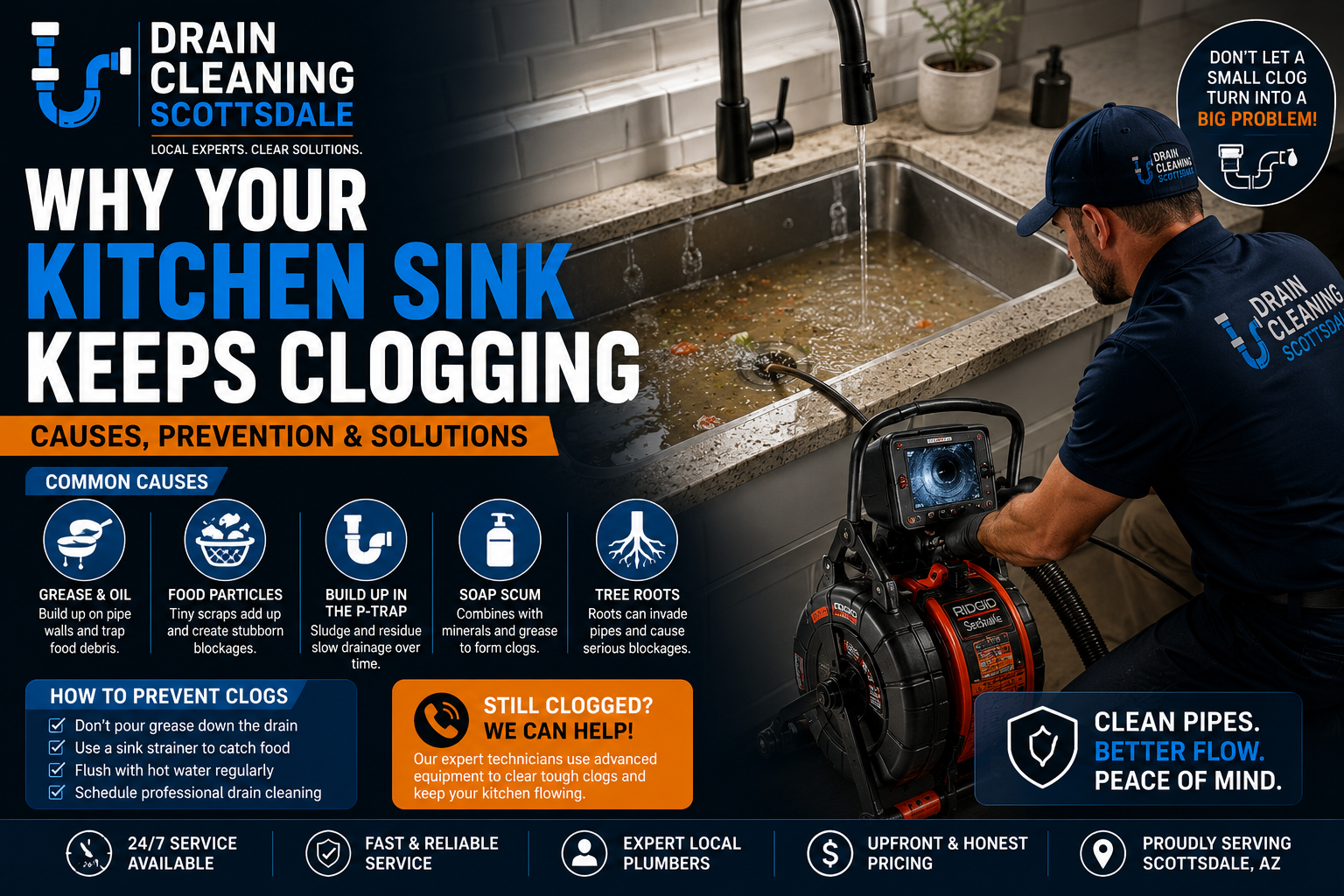
There are few things more frustrating in a kitchen than a sink that will not stay clear. You clean it out, the water drains fine for a week or two, and then the same slow drain comes right back. If your kitchen sink keeps clogging on this exact cycle, you are not alone, and you are also not imagining it. These clogs are rarely a one time event because most of them are caused by habits and buildup that happen gradually every single day, not by a single dramatic blockage.
At Drain Cleaning Scottsdale, a kitchen sink that keeps clogging is one of the most common calls we get from homeowners across Scottsdale Ranch, the Shea Corridor, and the Cactus Corridor. Below we break down the real causes behind recurring kitchen sink clogs, why they keep coming back even after you clear them, and what actually works to stop the cycle for good.
Grease Buildup Is the Number One Culprit
Grease is the single biggest reason a kitchen sink keeps clogging, and it is also the reason a clog that seems to clear on its own tends to return within weeks. When hot grease or cooking oil goes down the drain, it flows freely at first simply because it is warm. As it travels through the pipe and cools, it solidifies and sticks to the interior walls. Every subsequent load of dishes adds another thin layer, and over time that buildup narrows the pipe until water can barely pass through at all.
The tricky part is that grease buildup does not announce itself the way a sudden clog does. Instead, drainage gets slower a little at a time, so slowly that many homeowners do not notice until the sink is nearly at a standstill. By that point, hot water and dish soap alone usually are not enough to clear it, because the grease has hardened into a coating rather than a loose blockage. In many cases, clogged drain removal is the fastest way to completely eliminate the blockage and restore proper flow.
This is exactly the kind of buildup that professional grease trap cleaning is designed to address, particularly for households that cook frequently or for any commercial kitchen in the area. A grease trap intercepts fats, oils, and grease before they ever reach the main plumbing system, which prevents the slow accumulation that leads to a kitchen sink that keeps clogging in the first place.
Food Waste That Never Breaks Down
Even homes with a garbage disposal run into trouble here. Certain foods simply do not break down the way people assume they will, and a disposal only shreds food into smaller pieces, it does not dissolve them. Rice, pasta, and other starchy foods continue absorbing water after they go down the drain and expand well past their original size, effectively growing a blockage inside the pipe. Coffee grounds behave similarly, clumping together into a dense, sludge like mass instead of washing away. Eggshells and vegetable peels add fibrous material that tangles with other debris and grease to form a stubborn plug.
The fix here is mostly behavioral. A simple mesh strainer placed over the drain catches these particles before they ever enter the pipe, and scraping plates into the trash before rinsing them removes the bulk of the problem before it starts.
Soap Scum and Hard Water Minerals
This cause surprises a lot of homeowners because soap seems like the last thing that should clog a drain. The issue is what soap does after it mixes with grease and the mineral content in local water. Scottsdale’s water supply carries a notably high mineral load, and when that hard water combines with soap residue and grease, it forms a scummy layer along the inside of the pipe. That layer hardens over time into something closer to a mineral crust than ordinary soap film, and it narrows the pipe diameter just as effectively as grease does.
This is one reason a sink can seem perfectly clear after a plunger or a store bought drain cleaner, only to slow down again within a month. The plunger or chemical clears the loose material sitting on top, but the hardened mineral and soap layer underneath remains, and it keeps collecting new debris on the same schedule as before, which is a big part of why a kitchen sink keeps clogging even after you think you’ve fixed it.
A Garbage Disposal That Is Not Working Properly
If your garbage disposal is underpowered, jammed, or simply struggling, food waste is not getting broken down the way it should before it enters the drain line. Larger pieces of food then travel further into the plumbing system than they would otherwise, where they are more likely to combine with grease and mineral buildup to form a clog that is harder to reach and harder to clear. Homeowners in DC Ranch often experience this issue in busy kitchens where disposals are used daily.
A quick way to check is to run the disposal on its own and listen. A healthy disposal has a smooth, consistent sound. Grinding, humming without movement, or unusual rattling all suggest the unit needs a reset or a repair, and addressing that early prevents larger debris from making its way into your main drain line.
When the Real Problem Is Further Down the Line
Sometimes a kitchen sink that keeps clogging is not actually a kitchen sink problem at all. If you have already addressed grease, food waste, and your disposal, and the sink is still slow or backing up on a regular basis, the blockage may sit further down in your home’s main sewer line rather than in the kitchen drain itself. This is especially likely if you are also noticing slow drainage or gurgling in other fixtures around the house, which is one of the clearer signs your main sewer line is clogged.
In older homes throughout the Shea Corridor, tree roots and mineral scale in the main line can create a bottleneck that makes every fixture in the house, including the kitchen sink, drain more slowly than it should. A camera inspection and professional sewer line cleaning can confirm whether this is the actual source of the problem.
Homes on a septic system rather than a municipal connection should also consider whether the tank itself is nearing capacity, since a full or poorly maintained septic tank can cause exactly the same slow drainage symptoms throughout the home. Scheduling routine septic tank cleaning prevents this from becoming a recurring issue.
What Actually Stops the Cycle
Home remedies like hot water, dish soap, and baking soda with vinegar can help with very minor, early stage buildup, but they do not remove hardened grease or mineral scale once it has coated the inside of a pipe. Chemical drain cleaners are worse than most homeowners realize, since they can corrode older pipes and are genuinely dangerous to use in combination with a garbage disposal, where splashback can cause skin and eye irritation.
The habits that actually prevent a kitchen sink from clogging over and over are straightforward. Pour cooled grease and cooking oil into a disposable container instead of down the drain. Wipe pans with a paper towel before washing them. Use a mesh strainer for every load of dishes. Run hot water for a minute after each use to help flush any residue further down the line. And schedule professional drain cleaning on a regular basis rather than waiting for a full blockage, since professional hydro jetting removes the grease and mineral layer that hot water alone cannot touch.
Local Patterns We See Across Scottsdale
Kitchen sink clogs tend to follow slightly different patterns depending on the neighborhood. In Scottsdale Ranch, where many homes are several decades old, mineral scale combined with grease is the most common cause we find. Along the Shea Corridor, a mix of established single family homes and townhomes means we see everything from simple food waste clogs to deeper main line issues tied to root intrusion. And in the Cactus Corridor near the Airpark, where commercial kitchens sit close to residential properties, grease is by far the dominant factor, which is why we frequently recommend a combined service visit covering both the kitchen line and a grease trap inspection for property owners in that area.
A Realistic Maintenance Schedule for a Healthy Kitchen Drain
Most homeowners either do nothing until a clog forms or overdo it with harsh chemical treatments that cause more harm than good. A middle ground works better for almost every kitchen.
Weekly, run hot water down the drain for a minute or two after your last load of dishes to help move any residue further along the line before it has a chance to cool and stick. Monthly, a baking soda and vinegar treatment followed by a hot water rinse can help break up light residue, though it will not touch a genuine grease or mineral buildup that has already hardened. Every few months, check the garbage disposal for unusual sounds or slower than normal grinding, since a struggling disposal lets larger food particles reach the drain line intact. And on a yearly basis, especially for households that cook often or run a home business out of the kitchen, a professional hydro jetting service clears out the buildup that routine home care simply cannot reach.
For any home with heavy or frequent cooking, whether that means a large family, a home catering operation, or a short term rental with frequent turnover, grease trap service on a set schedule prevents the slow, invisible buildup that eventually shows up as a kitchen sink that keeps clogging no matter how carefully you maintain it otherwise.
Frequently Asked Questions
Why does my kitchen sink clog even though I have a garbage disposal? A garbage disposal shreds food into smaller pieces, it does not eliminate the material entirely. Shredded food still enters the drain line, and starchy or fibrous foods in particular continue to expand or clump together after they pass through the disposal, which means a disposal reduces the risk of clogs but does not remove it.
Is it safe to use a chemical drain cleaner on a kitchen sink? Most plumbers recommend against it, particularly for kitchens with a garbage disposal. These products can corrode aging pipes, and running a disposal shortly after using one can splash caustic chemicals back up out of the sink, creating a real safety risk. A mechanical approach, whether a plunger for minor clogs or professional hydro jetting for recurring ones, is safer and more effective.
How can I tell if the clog is in my kitchen sink or further down the main line? If only the kitchen sink is affected and other fixtures in the home drain normally, the issue is almost always local to the kitchen line. If you notice other drains slowing down or gurgling around the same time, especially fixtures with no obvious connection to the kitchen, the blockage is more likely sitting in the main sewer line rather than the kitchen drain itself.
How often should a grease trap be cleaned? This depends on usage volume, but any kitchen producing a meaningful amount of grease, whether residential or commercial, benefits from a regular service interval rather than waiting for slow drainage to appear. Waiting until symptoms show up usually means the buildup has already narrowed the pipe significantly.
Will hot water alone dissolve a grease clog? Hot water can help move soft, recently formed grease along, but it will not remove grease that has already hardened into a coating along the pipe wall. Once that stage is reached, only mechanical cleaning like hydro jetting fully clears it, since hot water traveling through a pipe cools long before it reaches deeper into the line.
Call Scottsdale Drain Cleaning for a Sink That Will Not Stay Clear
If your kitchen sink keeps clogging no matter what you try, the underlying buildup is very likely further inside the pipe than a plunger or a bottle of drain cleaner can reach. Our technicians use hydro jetting and camera inspection to clear grease, mineral scale, and food debris completely, and to confirm whether the real issue is deeper in your main line. Call us at +1 (480) 919-8331 to schedule service anywhere in Scottsdale and the greater Phoenix metro.