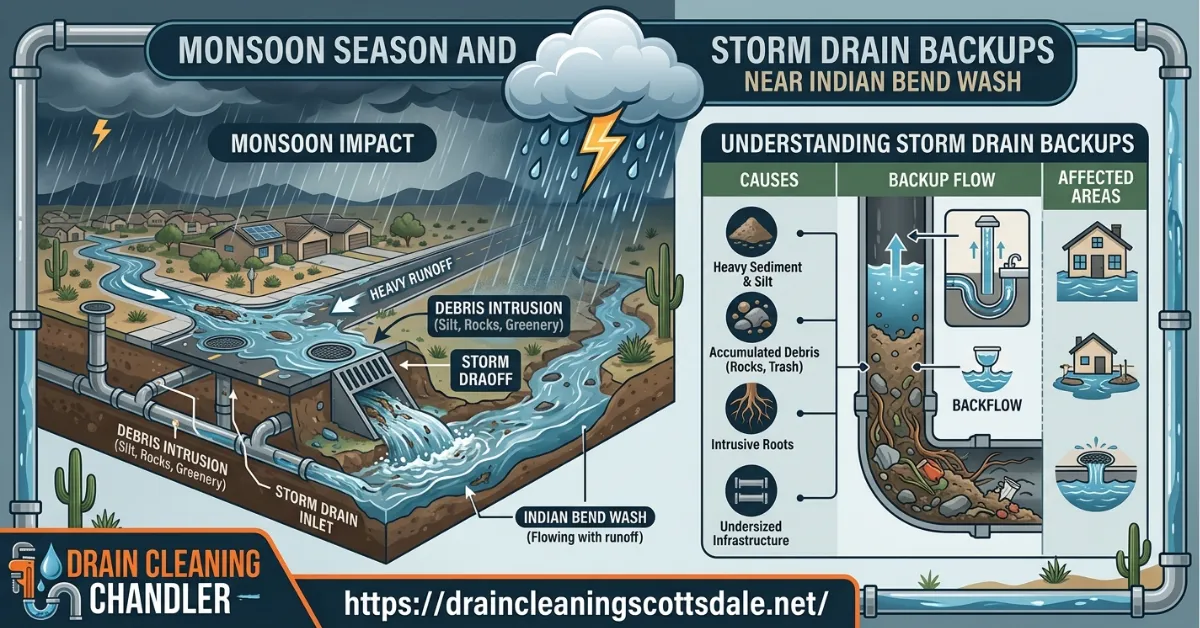
Why does my drain back up during monsoon season? Heavy monsoon rain overwhelms yard drains and storm drainage systems faster than they can move water away, and homes near a natural drainage channel like Indian Bend Wash often see this happen even faster because the surrounding ground is already designed to carry large volumes of runoff during a storm. When that runoff rises quickly, nearby yard drains and even household plumbing connected to shared grading can back up.
If you live near Indian Bend Wash in Scottsdale, AZ, you already know your property sits close to one of the busiest flood control corridors in the entire Valley. As a local drain cleaning professional working throughout this part of Scottsdale, I get more monsoon season calls from homes near the wash than almost anywhere else in the city. Understanding how the wash affects drainage on your own property helps you prepare before the next storm rather than react after it.
What Is Indian Bend Wash
Indian Bend Wash is a multi use flood control channel running through Scottsdale that is designed to carry large volumes of storm water safely away from neighborhoods during heavy rain, doubling as parks and greenbelt space during dry periods.
Why Homes Near Indian Bend Wash Face Unique Drainage Challenges
Living near a major flood control channel comes with drainage benefits most of the time, but it also creates specific challenges during intense monsoon storms.
- Higher water table during storms. As Indian Bend Wash fills with runoff, the surrounding ground can hold more moisture temporarily, slowing how quickly nearby yard drains can release water.
- Shared neighborhood drainage design. Many properties near the wash were graded specifically to funnel water toward it, meaning a blockage in that path can cause water to back up onto your property instead of flowing through.
- Increased runoff volume. Because the wash is designed to handle water from a large surrounding area, nearby streets and yard drains often see higher volumes of fast moving water during peak storms.
- Sediment carried by moving water. Runoff heading toward the wash often carries dirt, leaves, and debris that can clog area drains and yard drainage lines along the way.
- Established landscaping near the corridor. Many homes near Indian Bend Wash have mature trees and landscaping that add root intrusion risk to already busy drainage paths.
Why Monsoon Season Causes Drain Backups in Scottsdale
Beyond the specific challenges near the wash, monsoon season creates broader drainage pressure across the city.
- Sudden, high volume rainfall. Monsoon storms can drop an inch or more of rain in under an hour, far more water than typical drain sizing accounts for.
- Debris washed into drains. Dirt, leaves, and landscaping rock get swept along with runoff and lodge inside area drains and yard drain pipes.
- Dry, compacted desert soil. Ground that has been baked hard by summer heat absorbs water slowly, so more rain runs straight into drains instead of soaking into the yard.
- Aging drainage infrastructure. Established neighborhoods near Indian Bend have drainage systems that have handled decades of monsoon cycles, and sediment buildup over time reduces their original capacity.
- Existing pipe blockages. A yard drain or sewer line that already has a partial clog from roots or sediment fills up even faster once monsoon rain adds extra volume.
Signs You Need Drain Cleaning Before Monsoon Season
Catching these signs early can prevent a full backup once the rain arrives, especially for homes near the wash where drainage moves quickly during storms.
- Standing water in your yard that takes longer than a day to drain after a normal rain
- Gurgling sounds from indoor drains during or after rainfall
- A musty smell near yard drains or window wells
- Visible dirt or debris sitting at the top of area drains
- Water pooling near your foundation instead of flowing toward the street or wash
- Slow draining sinks or tubs that seem to worsen during humid, rainy weeks
If any of these sound familiar, scheduling drain cleaning before the next storm is far cheaper than dealing with flooding once monsoon season is in full swing.
Average Drain Cleaning Costs in Scottsdale
Storm related drain cleaning cost depends on the type of drain, how much debris has built up, and whether the blockage affects a yard drain, a main sewer line, or both. Most Scottsdale homeowners pay between 125 and 500 dollars for standard drain cleaning, with more involved sewer line work costing more.
Scottsdale Drain Cleaning Pricing Table
| Service | Typical Price Range |
|---|---|
| Area drain or yard drain cleaning | 150 to 350 dollars |
| Sink or tub drain cleaning | 125 to 250 dollars |
| Main line drain cleaning | 200 to 500 dollars |
| Hydro jetting for debris removal | 350 to 900 dollars |
| Sewer line camera inspection | 150 to 400 dollars |
| Sewer line cleaning or repair | 500 to 4,000 dollars |
| Storm season priority service | 100 to 250 dollars added fee |
| Emergency after hours service | 150 to 350 dollars added fee |
Pricing depends on how much sediment and debris a technician needs to clear, how deep the affected drain sits, and whether monsoon demand has increased scheduling urgency.
Factors That Affect Drain Cleaning Cost
- Amount of debris. Heavy dirt, rock, and organic material take longer to clear than a simple slow drain.
- Drain location. Yard drains and area drains near the surface are generally quicker to access than a main sewer line under a slab.
- Timing during monsoon season. High demand during storm season can affect scheduling and may include a priority service fee for same day work.
- Pipe condition. Older pipe materials common in established neighborhoods near the wash take more care to clean without causing damage.
- Method required. A basic snake job costs less than hydro jetting a fully packed line.
- Need for a camera inspection. Recurring backups often require a camera pass to confirm whether root intrusion or a collapsed section is contributing to the problem.
Different Drain Types Affected During Monsoon Season
Not all drains handle monsoon rain the same way, and knowing which one is involved helps target the right fix.
- Area drains and yard drains collect surface water from patios, driveways, and low lying yard sections and are the most likely to clog with dirt and debris, especially on properties graded toward the wash.
- French drains move groundwater away from foundations and can become blocked by silt after repeated heavy storms.
- Main sewer lines occasionally see backups when storm water infiltrates cracked or aging pipe joints, adding volume the line was not designed to handle.
- Roof gutters and downspouts feed directly into yard drainage systems and, when clogged, redirect more water than the connected drain can manage.
What Is Hydro Jetting
Hydro jetting is a drain cleaning method that uses high pressure water, typically 3,000 to 4,000 psi, to blast dirt, sediment, and debris out of a pipe rather than simply pushing a clog further down the line.
For homes near Indian Bend Wash, hydro jetting is especially effective because storm runoff often packs sediment tightly against pipe walls in a way a standard snake cannot fully clear.
Sewer Line Cleaning
Sewer line cleaning addresses the main pipe connecting your home to the municipal sewer system, which can be affected indirectly during heavy monsoon storms when saturated soil near the wash puts extra pressure on aging or already compromised pipe joints.
A typical sewer line service during storm season includes:
- A camera inspection to check for cracks, offset joints, or infiltration points
- Hydro jetting or mechanical snaking to clear sediment and debris
- Root cutting if tree growth has also affected the line
- A follow up camera pass to confirm the line is fully clear before the next storm
Camera Inspections
A camera inspection sends a waterproof camera through your pipes to show exactly where a blockage or damage sits, which is especially useful after monsoon season when sediment can hide deeper structural issues.
Camera inspections help confirm:
- Whether storm debris is the only issue or a cracked pipe is also involved
- If root intrusion has combined with sediment to worsen a clog
- Whether a yard drain connects properly to the main line without hidden damage
- That a line is fully clear before the next round of monsoon storms arrives
Emergency Drain Cleaning
How do I know if I have a drain emergency? If water is backing up into your home, pooling against your foundation, or multiple drains are backing up at once during or after a storm, that is a plumbing emergency that needs immediate attention rather than a scheduled appointment.
Situations that call for Emergency Drain Cleaning include:
- Storm water entering a garage, home, or crawl space
- Multiple yard drains or area drains overflowing at the same time
- Sewage or gray water backing up into a tub, shower, or floor drain during heavy rain
- Standing water that has not receded a full day after a storm has passed
Homeowners in neighborhoods near Indian Bend, where properties sit closer to a major flood control corridor, should treat sudden storm related backups as an emergency rather than waiting for the water to recede on its own.
Residential and Commercial Drain Cleaning Services
Storm drain issues look different for homes compared to larger commercial properties, especially near a corridor like Indian Bend Wash.
Residential drain cleaning typically covers yard drains, area drains, French drains, and main sewer lines for single family homes, focusing on keeping surface water moving away from the foundation and toward proper drainage paths during heavy rain.
Commercial drain cleaning covers larger parking lot drainage systems, loading dock area drains, and bigger diameter main lines that handle significantly more runoff volume, particularly for properties bordering the wash’s greenbelt and park areas.
Cost Saving Tips Before Monsoon Season
A little preparation before storm season saves money and stress once the rain starts.
- Schedule yard drain and area drain cleaning in late spring, before monsoon season begins in mid June.
- Clear leaves, rock, and debris away from visible drain grates regularly through the summer.
- Clean gutters and downspouts so they do not overload connected yard drains.
- Ask for a camera inspection if you noticed slow drainage or standing water during last year’s storms.
- Grade small low spots in your yard away from the foundation before the rainy season starts.
- Consider Storm Drain Cleaning as an annual service rather than a reactive call after flooding has already happened.
Why Scottsdale Homes Experience Drain Issues
Scottsdale’s climate and geography create specific conditions that make drain backups more common here than in many other regions, and homes near Indian Bend Wash often feel this most directly.
- High volume flood control design. Areas built around Indian Bend Wash were designed to move large amounts of water quickly, which means nearby drains handle more runoff pressure during peak storms.
- Extreme summer heat. Consistently high temperatures dry out compacted soil, reducing how much water the ground can absorb before a storm sends the rest into drains.
- Established neighborhoods with older infrastructure. Many homes near the wash were built decades ago, meaning aging pipe materials are more common than in newer parts of the city.
- Mature landscaping and root systems. Established trees throughout these neighborhoods have had years to grow into aging sewer line joints, adding clog risk during heavier rainfall.
- Hard water mineral buildup. Scottsdale’s water supply contributes to scale buildup inside pipes over time, which can combine with storm sediment to worsen blockages.
Why Professional Drain Cleaning Is Worth the Cost
A garden hose or a shop vac might clear surface debris temporarily, but it will not remove sediment packed deep into a yard drain line or reveal a cracked pipe hidden underground. A licensed drain cleaning professional brings camera equipment and hydro jetting tools that actually solve the problem instead of offering a short term fix before the next storm undoes the work.
Professional service also protects your property value, especially for homes close to a flood control corridor where drainage performance matters more than average. Repeated flooding near a foundation can lead to cracking, mold, and costly structural repairs, all of which cost far more than routine pre monsoon drain maintenance.
Conclusion
Living near Indian Bend Wash comes with real advantages most of the year, but it also means your property sits closer to some of the most active drainage pathways in Scottsdale during monsoon season. A little preparation, from clearing yard drains to confirming your main sewer line is ready, goes a long way toward keeping your home dry when the storms roll through. If your drains have struggled during past monsoon seasons, reach out to a local drain cleaning team who understands how this part of Scottsdale handles storm water and can get your drainage system ready for the season ahead.
Frequently Asked Questions
Why does my drain back up during monsoon season? Heavy monsoon rain overwhelms yard drains and storm drainage systems, and homes near a channel like Indian Bend Wash often see this happen faster because the surrounding ground is designed to carry large volumes of runoff during storms.
How do I know if I have a drain emergency during a storm? If water is entering your home, garage, or crawl space, or multiple drains are backing up at once, that is a plumbing emergency that needs same day attention rather than a scheduled visit.
Does living near Indian Bend Wash increase my flood risk? Homes near the wash benefit from its flood control design most of the time, but nearby yard drains can experience higher runoff pressure during intense monsoon storms, which is why regular maintenance matters.
How often should yard drains be cleaned before monsoon season? Most Scottsdale homeowners benefit from a yard drain and area drain cleaning once a year, ideally in late spring before monsoon season begins in mid June.
Can monsoon storms damage my sewer line? Yes. Saturated soil can put extra pressure on aging or already cracked sewer pipes, sometimes allowing storm water to infiltrate the line and add to backup risk.
Is hydro jetting effective for storm related clogs near a wash corridor? Yes, hydro jetting is highly effective for clearing packed dirt, sediment, and debris that a standard drain snake often cannot fully remove, which is common in areas with heavy runoff.
Should I get a camera inspection after a bad storm season? Yes, especially if you noticed repeated slow drainage or standing water, since a camera inspection can reveal sediment buildup or pipe damage that is not visible from the surface.
Can tree roots make monsoon flooding worse near the wash? Yes, since roots already narrowing a pipe leave less room for the additional water volume a monsoon storm sends through the system, increasing backup risk in established, tree lined areas.
What is the best way to prevent storm drain backups next year? Scheduling professional area drain and sewer line cleaning before monsoon season begins, along with regular gutter maintenance, is the most reliable way to prevent backups during the next round of storms.
Does homeowners insurance cover monsoon related drain backups near a flood control channel? Coverage varies by policy and provider, so it is worth reviewing your specific policy or speaking with your insurance agent about storm water and drain backup coverage for properties near flood control corridors.