Why is drain field installation harder in Scottsdale’s desert soil? Much of Scottsdale sits on a hard, cemented soil layer called caliche that resists digging, drains poorly, and requires specialized equipment to break through. This layer changes how a drain field must be sized, placed, and installed compared to homes built on ordinary soil, which is why septic work here often takes longer and costs more.
If you are planning a new septic system or dealing with a failing drain field in Scottsdale, AZ, you have probably already run into caliche without knowing exactly what it is called. As a local drain cleaning professional who has worked alongside septic installers throughout Scottsdale, including desert adjacent communities like Desert Mountain, I want to walk you through why this soil layer causes so many problems and what it actually takes to work around it correctly.
What Is Caliche
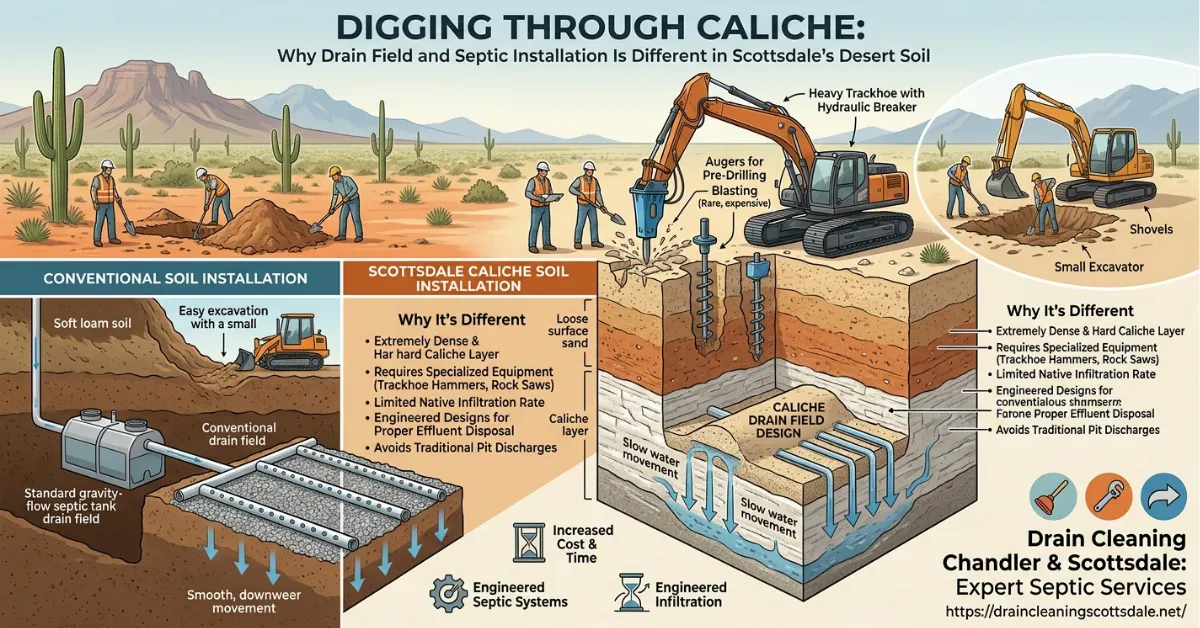
Caliche is a naturally cemented layer of soil, calcium carbonate, and rock that forms just below the surface in many parts of the Sonoran Desert, creating a hard, concrete like barrier that resists water absorption and standard digging equipment.
What Is a Drain Field
A drain field, also called a leach field, is the area of a septic system where treated wastewater is slowly released into the surrounding soil to be naturally filtered and absorbed after leaving the septic tank.
Why Caliche Makes Drain Field Installation Different in Scottsdale
Caliche changes nearly every part of the septic installation process compared to a property with typical, softer soil.
- It resists digging. Standard excavation equipment often cannot break through caliche efficiently, requiring heavier machinery or specialized attachments, which adds time and labor cost.
- It drains poorly. Because caliche is dense and cemented, water does not percolate through it the way it does through sandy or loamy soil, which affects how a drain field is designed to disperse wastewater.
- It varies in depth and thickness. Caliche layers are not uniform across a property or even across Scottsdale as a whole, so a soil test is required to understand the specific conditions on any given lot.
- It requires deeper or wider drain fields. When caliche sits close to the surface, a system may need to be spread out further or engineered differently to allow adequate wastewater absorption.
- It increases installation cost. Breaking through caliche and designing around its drainage limitations both add expense that homeowners in other regions typically do not face.
How Percolation Testing Works in Caliche Soil
A percolation test, often called a perc test, measures how quickly water absorbs into the soil at a proposed drain field site, which determines the size and design of the septic system needed.
In areas with caliche, percolation rates are often much slower than in typical soil, which can mean:
- A larger drain field area is required to compensate for reduced absorption
- Additional soil layers may need to be tested at different depths
- Alternative septic system designs, such as engineered or mound systems, may be necessary where caliche is especially thick
- Permitting through Maricopa County Environmental Services may involve more detailed soil documentation than a standard site
Signs of a Failing Drain Field or Septic System
Whether your system was installed decades ago or more recently, these signs suggest your drain field may be struggling, sometimes due to caliche related drainage limitations.
- Slow draining sinks, tubs, or toilets throughout the home
- Sewage odor near the drain field or septic tank area
- Standing water or unusually soggy ground above the drain field
- Gurgling sounds in household drains
- Unusually lush, green grass in a specific section of the yard
- Sewage backing up into household fixtures
If you notice several of these signs, especially in a home known to have septic service in caliche heavy soil, a professional inspection can confirm whether the drain field itself needs repair or replacement.
Average Drain Cleaning Costs in Scottsdale
Drain cleaning cost depends on the type of clog, the drain location, and whether a septic or municipal sewer connection is involved. Most Scottsdale homeowners pay between 125 and 500 dollars for standard drain cleaning, while septic and drain field related work costs more due to the specialized diagnosis required.
Scottsdale Drain Cleaning Pricing Table
| Service | Typical Price Range |
|---|---|
| Sink or tub drain cleaning | 125 to 250 dollars |
| Toilet drain clearing | 100 to 225 dollars |
| Main line drain cleaning | 200 to 500 dollars |
| Hydro jetting | 350 to 900 dollars |
| Sewer line camera inspection | 150 to 400 dollars |
| Septic tank pumping | 300 to 600 dollars |
| Drain field repair or partial replacement | 3,000 to 15,000 dollars |
| Emergency after hours service | 150 to 350 dollars added fee |
Drain field repair costs vary significantly depending on how much caliche must be removed and whether the entire field needs redesign or just a portion requires repair.
Factors That Affect Drain Cleaning and Septic Cost
- Caliche depth and thickness. Thicker layers require more equipment time and specialized digging methods.
- Percolation rate. Slower draining soil often requires a larger drain field footprint, increasing material and labor cost.
- System age and design. Older septic systems designed before modern caliche specific engineering may need more extensive repair.
- Access to the drain field. Mature landscaping or hardscaping above the field can complicate repair work.
- Need for a camera inspection. Diagnosing whether a problem is in the plumbing, the tank, or the drain field itself often requires camera equipment first.
- Permitting requirements. Additional soil testing or engineered system design required by caliche conditions can add to overall project cost.
Different Drain and Septic Components
Understanding the different parts of a septic system helps clarify where caliche related issues typically show up.
- Household drain lines carry wastewater from fixtures to the septic tank and can develop standard clogs unrelated to soil conditions.
- The septic tank holds and begins breaking down solid waste before liquid effluent moves on to the drain field.
- The drain field is where caliche most directly affects performance, since this is the component responsible for actual absorption into the soil.
- Distribution lines within the drain field spread wastewater evenly, and their layout is often adjusted specifically to work around caliche depth on a given property.
What Is Hydro Jetting
Hydro jetting is a drain cleaning method that uses high pressure water, typically 3,000 to 4,000 psi, to clear grease, scale, and debris from the interior of a pipe without relying on chemicals.
Hydro jetting is generally used for household drain lines and sewer connections rather than the drain field itself, since a drain field’s function depends on soil absorption rather than pipe clearing.
Sewer Line Cleaning
Sewer line cleaning addresses the main pipe connecting your home to either a municipal sewer system or a septic tank, and it plays a different role depending on which system your property uses.
For homes on a septic system, sewer line cleaning includes:
- A camera inspection to confirm the line from the home to the tank is clear
- Mechanical snaking or hydro jetting if buildup is affecting flow to the tank
- Verification that the issue is not actually located in the drain field or tank itself
- Coordination with septic service if the tank or drain field needs separate attention
Camera Inspections
A camera inspection sends a waterproof camera through your pipes to show blockages, damage, or flow issues, which helps determine whether a slow drain is a simple household clog or a sign of a struggling drain field.
Camera inspections are especially useful for septic homes in caliche areas because they help rule out a plumbing side clog before assuming the more expensive drain field is at fault.
Emergency Drain Cleaning
How do I know if I have a drain emergency? If sewage is backing up into multiple fixtures, standing water is pooling above your drain field with no recent rain, or you notice a strong sewage odor throughout the home, that is a plumbing emergency that needs immediate attention rather than a scheduled visit.
Situations that call for Emergency Drain Cleaning on a septic property include:
- Sewage backing up into a tub, shower, or floor drain
- Sudden pooling or soggy ground above the drain field
- A septic tank alarm indicating a high water level, if your system has one installed
- Multiple fixtures losing drainage at the same time
Homeowners in caliche heavy areas like Desert Mountain should treat sudden drain field related backups as an emergency, since a failing field can quickly become a larger, more expensive repair if wastewater continues to accumulate.
Residential and Commercial Drain Cleaning and Septic Services
Both residential and commercial properties in Scottsdale can be affected by caliche soil conditions, though the scale of service differs.
Residential drain cleaning and septic service typically covers single family homes with individual septic systems, especially in desert adjacent areas where municipal sewer connections are not available.
Commercial drain cleaning for properties on larger septic systems, such as rural event venues or larger estate properties, often requires more extensive drain field engineering to handle higher wastewater volume in the same challenging caliche soil.
Cost Saving Tips for Septic Homeowners in Caliche Soil
A few proactive habits can help you avoid a costly drain field repair.
- Schedule regular septic tank pumping to prevent solids from overwhelming the drain field.
- Avoid parking vehicles or placing heavy structures above your drain field, since compaction reduces absorption even further in caliche soil.
- Space out laundry loads and heavy water use rather than running everything at once, which reduces strain on a slower draining field.
- Ask for a percolation test update if your system was installed decades ago and caliche conditions were less understood at the time.
- Address household drain clogs quickly so the true condition of your drain field is not masked by an unrelated plumbing issue.
- Work with professionals experienced in Drain Field Repair specific to caliche conditions rather than a general septic contractor unfamiliar with local soil.
Why Scottsdale Homes Experience Drain Issues
Beyond caliche and septic specific challenges, several other factors contribute to drain problems across Scottsdale.
- Expansive clay soil in non caliche areas. Even outside of heavy caliche zones, Scottsdale’s soil shifts with moisture changes, stressing underground pipes over time.
- Extreme summer heat. High temperatures affect both plumbing and septic systems, drying out P traps and altering soil moisture around drain fields.
- Established desert adjacent neighborhoods. Communities like Desert Mountain sit closer to natural desert terrain, where caliche is often thicker and closer to the surface than in more central parts of the city.
- Hard water mineral buildup. Scottsdale’s water supply contributes to scale buildup inside household pipes, which is a separate issue from drain field performance but still affects overall plumbing health.
- Mixed sewer and septic infrastructure. Depending on location, some Scottsdale properties connect to municipal sewer while others rely on septic systems, meaning drain issues can stem from very different sources.
Why Professional Drain Cleaning Is Worth the Cost
Caliche soil does not forgive guesswork. A licensed drain cleaning and septic professional understands how to test percolation rates, design around variable soil depth, and diagnose whether a problem sits in your household plumbing, your septic tank, or the drain field itself.
Professional service also protects your investment. A poorly designed or improperly repaired drain field in caliche soil can fail again within a few years, leading to repeated excavation costs far higher than getting the design right the first time. Paying for experienced, caliche aware service upfront is almost always more cost effective than a series of temporary fixes.
Conclusion
Digging through caliche is simply part of doing plumbing and septic work in Scottsdale’s desert soil, and it changes how drain fields need to be designed, tested, and maintained compared to homes built on ordinary ground. Whether you are installing a new septic system or troubleshooting a struggling drain field, understanding how caliche affects absorption and installation helps you make better decisions and avoid repeat repairs. If you are dealing with slow drains, sewage odor, or standing water above your drain field, reach out to a local drain cleaning and septic team who understands Scottsdale’s caliche soil and can design a system that actually works with it.
Frequently Asked Questions
Why is drain field installation harder in Scottsdale’s desert soil? Much of Scottsdale sits on caliche, a hard cemented soil layer that resists digging and absorbs water poorly, requiring specialized equipment and drain field design compared to homes on typical soil.
How do I know if I have a drain emergency related to my septic system? If sewage is backing up into multiple fixtures, standing water is pooling above your drain field, or a septic alarm indicates a high water level, that is an emergency needing immediate attention.
What is caliche and why does it matter for septic systems? Caliche is a naturally cemented layer of soil and calcium carbonate found throughout the Sonoran Desert that drains poorly, directly affecting how a septic drain field must be sized and installed.
How deep is caliche typically found in Scottsdale? Caliche depth varies significantly by property and location, which is why a percolation test and soil evaluation are necessary before designing any new septic system in the area.
Can an existing drain field be repaired if caliche is causing problems? In many cases yes, though repair options depend on the extent of caliche interference and may include redesigning the field layout or increasing its overall footprint.
How often should septic tanks be pumped in Scottsdale? Most residential septic tanks need pumping every three to five years, though usage levels and tank size can shift that timeline in either direction.
Does caliche affect regular household plumbing, not just septic systems? Caliche primarily affects septic drain fields and their absorption capacity, while household plumbing issues like clogs and hard water buildup stem from separate causes.
Is it more expensive to install a septic system in caliche soil? Yes, since breaking through caliche and designing an appropriately sized drain field for its slower percolation rate both add cost compared to installation in typical soil.
What happens if a drain field fails in caliche soil? A failing drain field can cause sewage backups into the home and standing wastewater above the field, both of which require prompt professional evaluation and repair.
Should I get a soil test before buying a home with a septic system in Scottsdale? Yes, especially in desert adjacent neighborhoods, since understanding caliche depth and drain field condition beforehand can help avoid unexpected repair costs after purchase.