Is a slow drain a big problem? Not always. A slow draining sink is often a partial clog you can check yourself, caused by hair, soap scum, or grease near the surface, while a full clog usually means standing water that will not move at all and points to a deeper blockage. Knowing which one you are dealing with helps you decide whether to try a simple fix or call a professional.
If you are standing at your bathroom sink right now watching water drain slower than it used to, you are trying to figure out the same thing every Scottsdale homeowner asks before picking up the phone. As a local drain cleaning professional working throughout Scottsdale, AZ, including established communities like Scottsdale Ranch, I walk people through this exact decision multiple times a week. Here is what to check first, and how to tell when it is time to bring in a professional.
Slow Draining Sink or Full Clog: What Is the Difference
A slow drain still allows water to pass through, just at a reduced rate, usually because of a partial blockage near the drain opening. A full clog means water is not draining at all, which typically points to a blockage deeper in the line or a larger buildup that has completely closed off the pipe.
What to Check Before Calling a Plumber
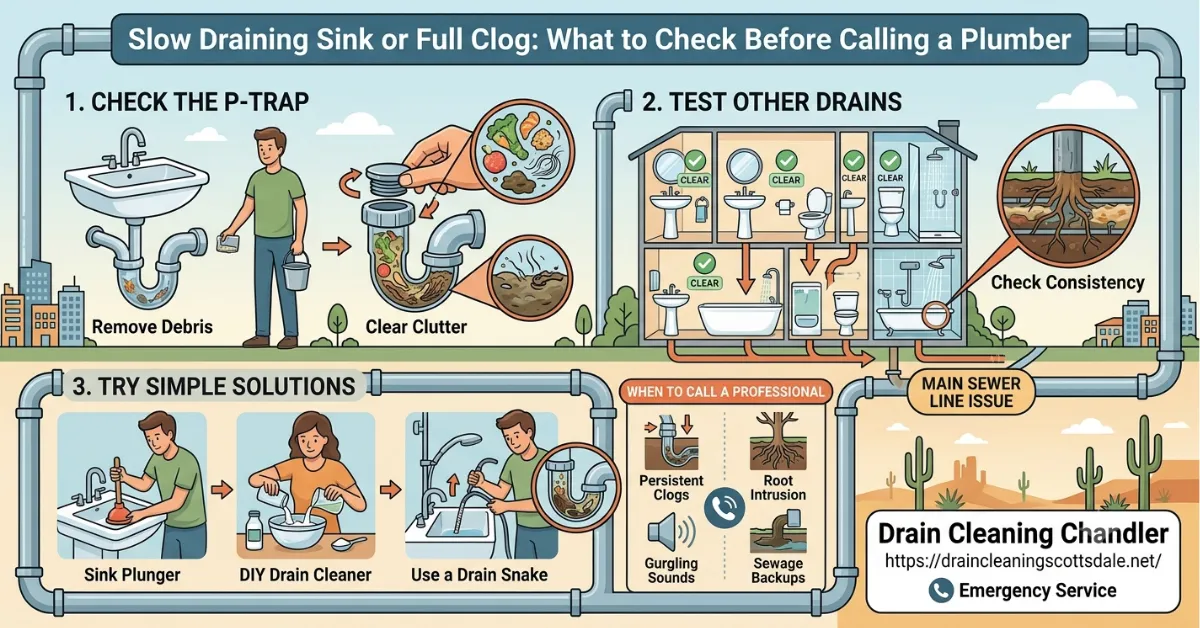
Before scheduling a service call, a few quick checks can tell you whether this is something you can handle yourself or something that needs professional equipment.
1. Check the Drain Stopper and Visible Debris
Many bathroom sinks slow down because of hair and soap buildup caught right at the stopper. Remove the stopper if possible and clear away any visible debris by hand before assuming the problem is deeper in the pipe.
2. Run Hot Water Through the Drain
Running hot water for a minute or two can help loosen minor grease or soap buildup close to the surface. If drainage improves noticeably, you were likely dealing with a simple partial clog rather than a full blockage.
3. Test Other Drains in the Same Area
If a nearby sink, tub, or toilet is also draining slowly, the issue may be further down in a shared drain line rather than isolated to one fixture. This is an important clue that points toward a larger clog.
4. Listen for Gurgling Sounds
Gurgling while water drains suggests trapped air, which usually means a blockage is affecting more than just the surface level of the pipe. This is a sign the problem may need more than a simple plunger.
5. Try a Plunger on the Affected Fixture
A standard plunger can clear many partial clogs in sinks, tubs, and toilets. If plunging does not improve drainage at all, the blockage is likely too deep or too solid for basic tools to reach.
6. Check for a Sewage Smell
A sewage odor near the drain, especially combined with slow drainage, suggests the blockage may be affecting airflow in the pipe and could involve more than a simple surface clog.
7. Note How Quickly the Problem Developed
A drain that has slowed gradually over weeks is usually a buildup issue, while one that stopped working suddenly often points to a more serious blockage, tree root intrusion, or a foreign object stuck in the line.
Signs You Need Professional Drain Cleaning
If your checks above point toward a bigger issue, these signs confirm it is time to call a professional rather than keep troubleshooting on your own.
- Multiple drains in your home are slow or backed up at the same time
- Plunging has no effect at all on drainage
- Water backs up into a different fixture when you run another one
- A persistent sewage smell accompanies the slow drainage
- The problem has returned multiple times despite previous attempts to clear it
- Standing water has not moved after several hours
Average Drain Cleaning Costs in Scottsdale
Drain cleaning cost depends on whether you are dealing with a simple partial clog or a full blockage deeper in the line. Most Scottsdale homeowners pay between 125 and 450 dollars for standard drain cleaning, while sewer line issues cost more due to the equipment and diagnostic work involved.
Scottsdale Drain Cleaning Pricing Table
| Service | Typical Price Range |
|---|---|
| Sink or tub drain cleaning | 125 to 250 dollars |
| Toilet drain clearing | 100 to 225 dollars |
| Main line drain cleaning | 200 to 500 dollars |
| Hydro jetting | 350 to 900 dollars |
| Sewer line camera inspection | 150 to 400 dollars |
| Sewer line cleaning or repair | 500 to 4,000 dollars |
| Emergency after hours service | 150 to 350 dollars added fee |
A simple slow drain almost always costs less to fix than a full clog, which is why catching the problem early tends to save money.
Factors That Affect Drain Cleaning Cost
- Clog severity. A partial clog near the surface clears faster and cheaper than a full blockage deep in the line.
- Clog location. Blockages near an accessible cleanout cost less to reach than ones under a slab or behind a wall.
- Pipe material and age. Older pipe requires more careful handling than modern PVC.
- Method required. A basic snake job costs less than hydro jetting a heavily packed line.
- Time of service. Weekend or after hours calls typically include an added fee.
- Need for a camera inspection. Recurring clogs often require a camera pass to confirm the actual cause.
Different Drain Types and How They Clog
Not every drain in your home clogs the same way, and knowing the type helps determine the right fix.
- Bathroom sink drains usually slow down due to hair and soap scum buildup near the stopper.
- Kitchen sink drains clog most often from grease, food particles, and soap combining inside the pipe.
- Tub and shower drains trap hair against the pipe wall, often worsened by soap residue.
- Toilet drains can clog from excess paper or foreign objects and sometimes signal a deeper main line issue if plunging does not help.
- Main sewer lines affect multiple fixtures at once when blocked and almost always require professional equipment to clear.
What Is Hydro Jetting
Hydro jetting is a drain cleaning method that uses high pressure water, typically 3,000 to 4,000 psi, to clear grease, scale, and debris from the entire interior of a pipe rather than just pushing through the center of a clog.
Hydro jetting is generally reserved for full clogs or recurring slow drains that a standard snake could not fully resolve, since it removes buildup along the whole pipe wall instead of just clearing a path through it.
Sewer Line Cleaning
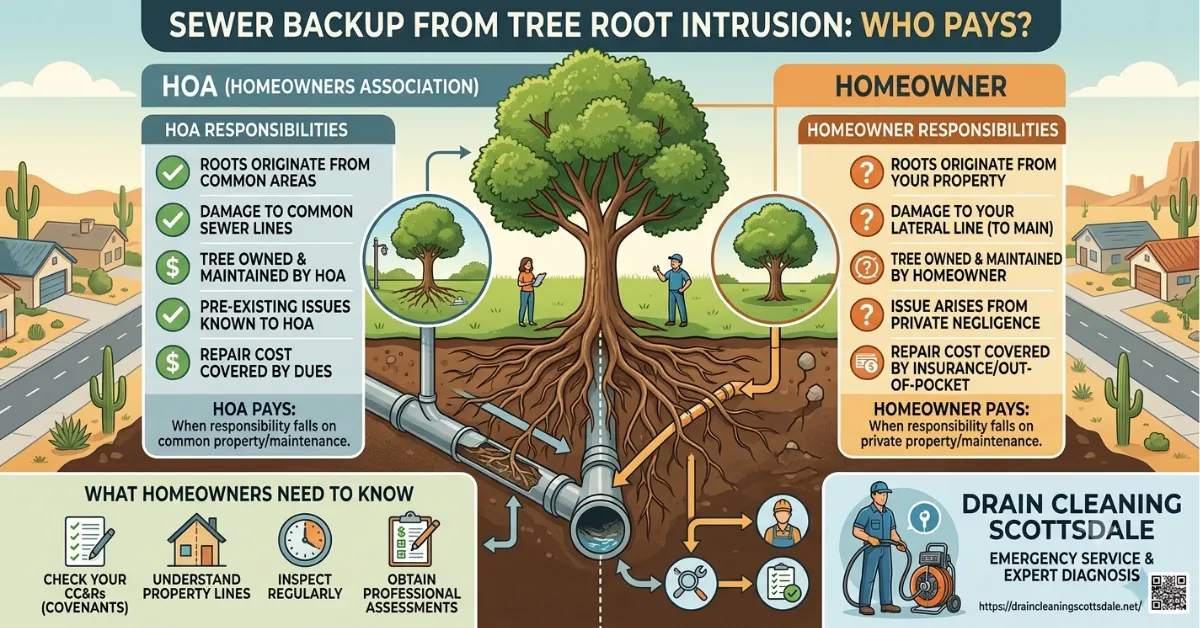
Sewer line cleaning addresses the main pipe connecting your home to the municipal sewer system, which is usually the source when multiple drains are slow or backed up at the same time.
A typical sewer line service includes:
- A camera inspection to locate the exact blockage or damage
- Hydro jetting or mechanical snaking to clear the line
- Root cutting if tree intrusion is contributing to the clog
- A follow up camera pass to confirm the line is fully clear
Camera Inspections
A camera inspection sends a waterproof camera through your pipes to show the exact cause of a slow drain or full clog, whether that is buildup, a foreign object, root intrusion, or a cracked pipe.
Camera inspections are especially useful when a slow drain has returned more than once, since they reveal whether the real cause sits deeper in the line than basic tools can reach.
Emergency Drain Cleaning
How do I know if I have a drain emergency? If water is backing up into multiple fixtures, standing water will not drain at all after several hours, or a sewage smell fills your home, that is a plumbing emergency that needs same day attention rather than a scheduled visit.
Situations that call for Emergency Drain Cleaning rather than routine troubleshooting include:
- Sudden backups affecting more than one drain
- Standing water that has not moved despite plunging and hot water
- A strong, persistent sewage odor throughout the home
- Water rising in one fixture when a different one is used
Residential and Commercial Drain Cleaning Services
Slow drains and full clogs look different depending on the property type involved.
Residential drain cleaning typically addresses kitchen and bathroom clogs, main line blockages, and recurring slow drains in single family homes throughout Scottsdale, including established neighborhoods like Scottsdale Ranch.
Commercial drain cleaning covers higher volume systems, including restaurant grease traps, multi unit sewer lines, and retail floor drains, where a slow drain in one unit can sometimes point to a larger shared line issue affecting the whole property.
Cost Saving Tips to Avoid a Full Clog
A few habits can help keep a slow drain from turning into a full blockage.
- Address a slow drain as soon as you notice it rather than waiting for it to worsen.
- Use a drain screen in showers and tubs to catch hair before it builds up.
- Avoid pouring grease, coffee grounds, or fibrous scraps down kitchen drains.
- Run hot water through drains weekly to help limit buildup between cleanings.
- Schedule a camera inspection if a drain has slowed more than once in the past year.
- Ask about Clogged Drain Removal as a preventive service rather than waiting until drainage stops completely.
Why Scottsdale Homes Experience Drain Issues
Scottsdale’s climate and infrastructure create specific conditions that make slow drains and clogs more common than in many other regions.
- Hard water mineral buildup. Scottsdale’s water supply carries a notable mineral content that narrows pipes over time, contributing to slow drainage.
- Expansive desert soil. Soil across the Scottsdale area expands and contracts with moisture changes, which can shift and stress underground sewer lines.
- Established neighborhoods with aging pipe. Communities like Scottsdale Ranch have decades old plumbing infrastructure that is more prone to buildup and blockages than newer construction.
- Desert landscaping root systems. Mature trees throughout Scottsdale search out moisture and can intrude into aging sewer line joints.
- Extreme summer heat. High temperatures can accelerate mineral scale formation inside pipes, speeding up the path from a minor slow drain to a full clog.
Why Professional Drain Cleaning Is Worth the Cost
DIY tools and store bought chemical drain cleaners can resolve minor surface clogs, but they rarely reach a full blockage deeper in the line and can sometimes damage older pipe with repeated use. A licensed drain cleaning professional brings camera equipment and hydro jetting tools that identify the actual cause and clear it completely, rather than offering a temporary fix.
Professional service also prevents a manageable slow drain from turning into an expensive emergency. Left unaddressed, buildup continues to accumulate until a full clog forms, sometimes leading to backups that affect multiple fixtures or even cause water damage. Paying for a proper inspection and cleaning now is almost always cheaper than dealing with a full blockage later.
Conclusion
A slow draining sink does not have to turn into a full clog if you catch it early and know what to check first. Whether it is hair caught at the stopper or a deeper blockage affecting multiple fixtures, the checks above can help you figure out what you are dealing with before deciding whether to call a professional. If your drain is still slow after trying the basics, reach out to a local drain cleaning team who can pinpoint the real cause and get your plumbing flowing normally again.
Frequently Asked Questions
Is a slow drain a big problem? Not always. A slow draining sink is often a partial clog you can check yourself, while a full clog usually means standing water that will not move and points to a deeper blockage.
What is the difference between a slow drain and a full clog? A slow drain still allows water to pass at a reduced rate, while a full clog means water is not draining at all, usually due to a larger blockage further down the line.
Can I fix a slow drain myself? Many minor slow drains can be improved by clearing visible debris, running hot water, or using a plunger, but recurring or deep blockages typically need professional equipment.
How do I know if I have a drain emergency? If water is backing up into multiple fixtures, standing water will not drain after several hours, or a sewage smell fills your home, that is an emergency needing same day attention.
Why does my drain slow down again after I clear it? This usually means the real blockage sits deeper in the line than a plunger or basic tools can reach, which is why the clog keeps returning after a temporary fix.
Is hydro jetting necessary for a slow drain? Not always. Hydro jetting is generally used for full clogs or recurring slow drains where standard snaking has not fully resolved the buildup.
How much does it cost to fix a slow drain in Scottsdale? Most simple slow drain cleanings cost between 125 and 250 dollars, while a full clog involving the main line can cost 200 dollars or more depending on severity.
Can a slow drain mean a sewer line problem? Yes, especially if multiple drains are slow at the same time, since this often points to a main sewer line issue rather than an isolated fixture clog.
Should I use chemical drain cleaner on a slow drain? It is best to use chemical cleaners sparingly, since they can damage older pipe over time and often fail to resolve blockages that sit deeper in the line.
When should I get a camera inspection for a slow drain? A camera inspection is worth scheduling if a slow drain has returned more than once despite cleaning, since it reveals the exact cause hiding deeper in the pipe.